I am of the nature to grow old. There is no way to escape growing old.
I am of the nature to have ill health. There is no way to escape ill health.
I am of the nature to die. There is no way to escape death.
All that is dear to me and everyone I love are of the nature to change. There is no way to escape being separated from them.
My actions are my only true belongings. I cannot escape the consequences of my actions. My actions are the ground upon which I stand.
Showing posts with label Health. Show all posts
Showing posts with label Health. Show all posts
Tuesday, February 23, 2010


Monday, January 19, 2009
Healthy on a Small Planet
Is there a simple way to evaluate the quality of food in terms of health and sustainability?
In the UK, a traffic light food labeling system was introduced in certain supermarkets to indicate whether levels of fat, saturated fat, sugar and salt where safe, moderately high or very high.
 While the label is helpful to those aware of their specific health risks - diabetes, cholesterol and high blood pressure - it fails to give the average consumer an indication of how much "quality" a product has.
The obvious pitfall is to disqualify food on the basis of a nutritional configuration. This type of selection belongs to the realm of marketing, the food and pharmacological industries. Buying food intelligently is not to follow the industry's "health” claims. No natural food is inherently unhealthy.
All natural foods are healthy as long as they are balancing to the eater's constitution, that they are eaten at an appropriate time and season, that they are combined properly, that they are made digestible (with cooking or spices for example), that they are eaten in proper quantity. As a consequence, no "natural" organic food, should be considered unhealthy and attributed a red light. Organic butter might receive a red light in the aforementioned labeling system for its saturated fat content, while it is almost universally life-giving to those eating it in the proper conditions.
Below is an alternative labeling system (open to modifications) which indicates definite risk for health, for the environment or for unfair population exploitation.
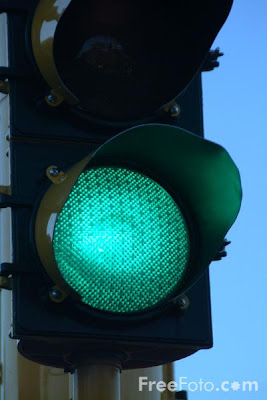
Green Light
The Bottom Line:
Healthy. Respectful of the environment. Respectful of workers. Efficient in space and energy. Sustainable.
All foods in this group must be:
Have fresh.
Take into account individual needs (pregnant, diabetes...).
Always include in a varied, balanced diet.
*Organic as in replenishes the soil, respects natural cycles, without chemicals, respectful of the welfare and health of animals, 100% natural, not from large monoculture fields.
**Can have a bad ecological impact, but not as much as “yellow light” or “red light” foods.
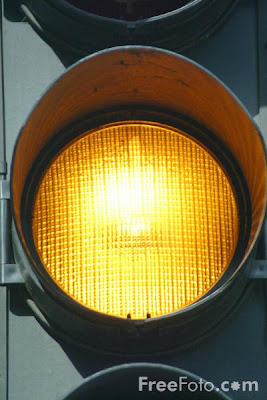
Yellow Light
The Bottom Line:
Healthy but either:
All foods in this group must be
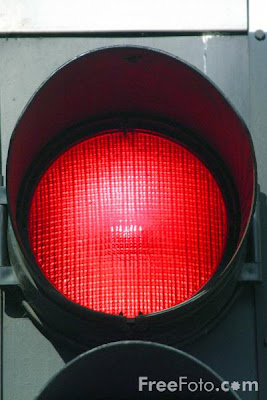
Red Light
The Bottom Line:
Avoid altogether. Unhealthy, damaging to the environment, damaging to workers, encourages an unethical economy.
In the UK, a traffic light food labeling system was introduced in certain supermarkets to indicate whether levels of fat, saturated fat, sugar and salt where safe, moderately high or very high.
 While the label is helpful to those aware of their specific health risks - diabetes, cholesterol and high blood pressure - it fails to give the average consumer an indication of how much "quality" a product has.
The obvious pitfall is to disqualify food on the basis of a nutritional configuration. This type of selection belongs to the realm of marketing, the food and pharmacological industries. Buying food intelligently is not to follow the industry's "health” claims. No natural food is inherently unhealthy.
All natural foods are healthy as long as they are balancing to the eater's constitution, that they are eaten at an appropriate time and season, that they are combined properly, that they are made digestible (with cooking or spices for example), that they are eaten in proper quantity. As a consequence, no "natural" organic food, should be considered unhealthy and attributed a red light. Organic butter might receive a red light in the aforementioned labeling system for its saturated fat content, while it is almost universally life-giving to those eating it in the proper conditions.
Below is an alternative labeling system (open to modifications) which indicates definite risk for health, for the environment or for unfair population exploitation.

Green Light
The Bottom Line:
Healthy. Respectful of the environment. Respectful of workers. Efficient in space and energy. Sustainable.
All foods in this group must be:
- Organic*
- Local
- In Season
- Fair for workers along the entire chain of production and distribution.
- 100% Natural. Without any additives or synthetic chemicals.
- Vegetables
- Fruit
- Whole grains and cereal
- Beans
- Nuts and Seeds
- Oils
- Spices and Herbs
- Beverages
- Unrefined sweeteners
- Eggs
- Dairy**
- Sea Vegetables**
- Honey, propolis, royal jelly, pollen**
Have fresh.
Take into account individual needs (pregnant, diabetes...).
Always include in a varied, balanced diet.
*Organic as in replenishes the soil, respects natural cycles, without chemicals, respectful of the welfare and health of animals, 100% natural, not from large monoculture fields.
**Can have a bad ecological impact, but not as much as “yellow light” or “red light” foods.

Yellow Light
The Bottom Line:
Healthy but either:
- Taxing in resources of space or energy.
- Damaging to the environment or species in excess.
- Addictive.
- Excessively stimulating or dulling.
- Unhealthy when not eaten only occasionally.
All foods in this group must be
- Organic*
- Fair for workers along the entire chain of production and distribution.
- 100% Natural. Without any additives or synthetic chemicals.
- Meat
- Fish
- Poultry
- Coffee, guarana, ...
- Alcohol
- Sweets and candy
- Refined flour, cereal and sweeteners
- All “Green light” foods that are not produced and distributed locally

Red Light
The Bottom Line:
Avoid altogether. Unhealthy, damaging to the environment, damaging to workers, encourages an unethical economy.
- Food grown with chemical pesticides and herbicides
- Genetically engineered food
- Animals fed with food that belongs to this red light list or unsuited for their needs
- Animals not raised in proper conditions for welfare and health
- Fish from polluted water or from intensive fish farms.
- Plants from large monoculture fields
- Endangered species of animals or plants
- Food produced, transformed or distributed in a way that does not respect workers
- Food produced, transformed or distributed in a way that prevents the economic emancipation of poorer countries
- Food processed with chemical additives
- Processed oil
- Excessively salty, sweet or fat processed food
Saturday, April 19, 2008
Men's Four Yoga Challenges
Almost every part of the body will greatly benefit from a complete yoga workout. However, there are poses which are particularly crucial for men because of their anatomical focus on areas that seem to affect us more than our female counterparts.
The second two are joint complexes. Hips are locked and the lower back is inflamed and stiff.
These parts of the body are too often overlooked by bodybuilders and many other athletes who could avoid pain and increase performance by targeting these areas from time to time.
Upavishta Konasana is recommended for the hips and lower back.
Paripurna Navasana for abdominal strength.
Uttanasana done properly will help stretch hamstrings and the lower back
Namaste.
- The hamstrings
- The abdomen
- The hips
- The lower back
The second two are joint complexes. Hips are locked and the lower back is inflamed and stiff.
These parts of the body are too often overlooked by bodybuilders and many other athletes who could avoid pain and increase performance by targeting these areas from time to time.
Upavishta Konasana is recommended for the hips and lower back.
Paripurna Navasana for abdominal strength.
Uttanasana done properly will help stretch hamstrings and the lower back
Namaste.
Tuesday, April 15, 2008
Subscribe to:
Posts (Atom)